
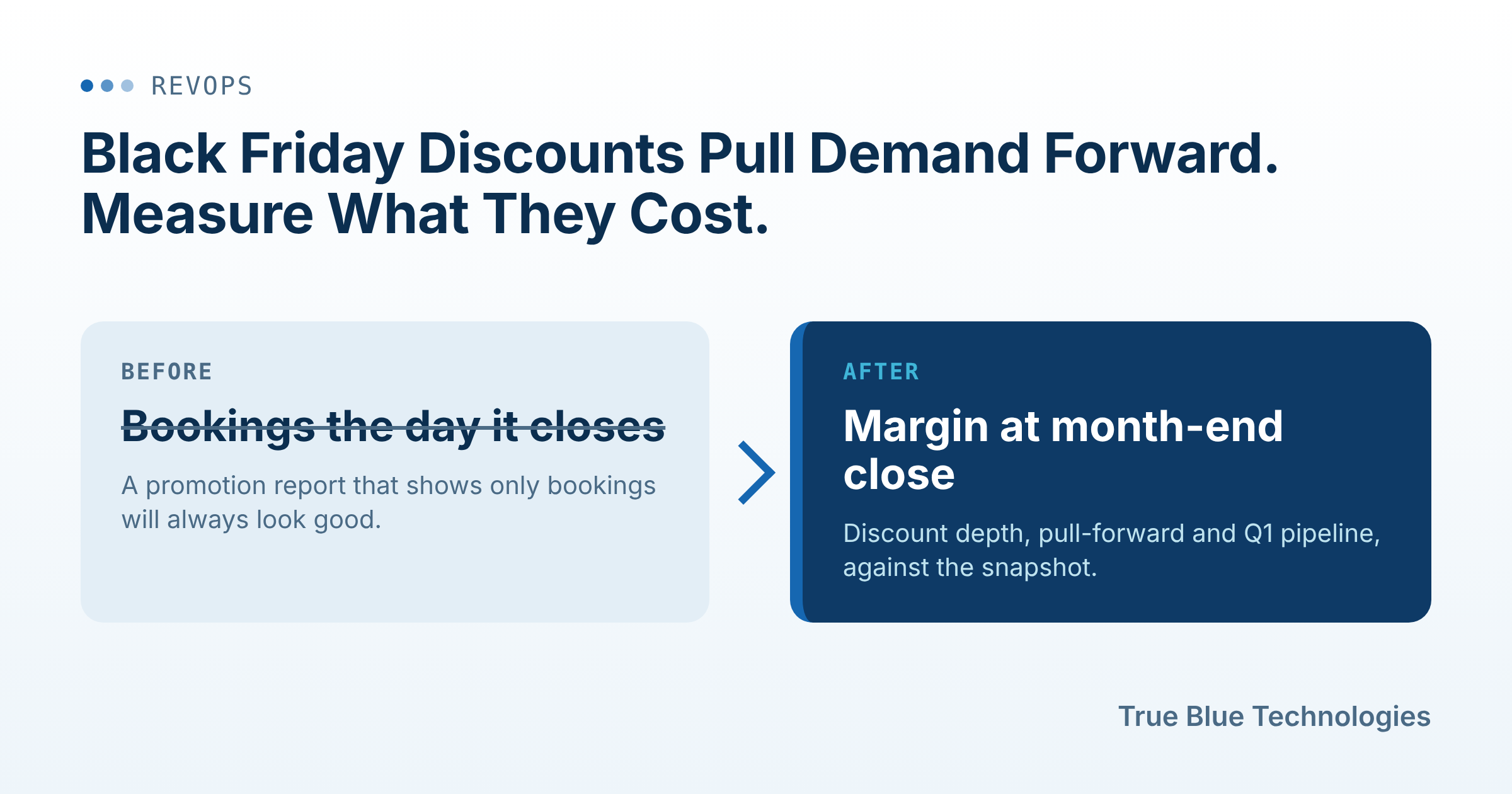
Every year-end promotion looks like a win on the day it closes. The real test comes later: at month-end close, when finance sees the margin, and in January, when sales sees how thin the pipeline is.
Black Friday is a good time to run that test, because your buyers have spent the whole week learning to wait for a deal.
Deals Start Earlier, but Spend Doesn't Grow
Deloitte's 2026 Holiday Retail Survey found that 87% of shoppers plan to shop Black Friday-Cyber Monday, up from 82% in 2025 and a 10-year high. Average planned spending for those days is flat at $624.
The same survey found that June promotions had already captured some holiday purchases for 1 in 4 shoppers, and that October sales are up 18 percentage points since 2023. More people are shopping the deals, they're starting earlier, and they aren't spending more. The promotions are mostly moving purchases to a different date.
That's consumer data, but B2B buyers are the same people. The year-end push most of our clients run, whether it's a Black Friday offer, a Q4 discount or a "sign by December 31" incentive, often works the same way. It pulls deals forward rather than adding them.
What the Bookings Number Hides
A promotion report that shows only bookings will always look good. It leaves out three costs:
- Discount depth. The deal closed, but at what price compared with the same customer's last renewal or your list price?
- Pull-forward. How many of these deals were already in the pipeline for Q1 at full price? If they were, the promotion moved revenue from one quarter to another and paid a discount to do it.
- The next renewal. A customer who bought at 25% off this December will expect the same deal next December. That discount gets built into the account.
Measure the Promotion in Four Steps
- Tag every promotional deal in the CRM. Use a required field or a campaign code, set when the quote is created, not added afterward. If reps can apply the discount without the tag, your reporting will undercount it.
- Snapshot the pipeline before the promotion starts. Record every open opportunity, its stage, amount and expected close date. That snapshot is what lets you drill down later and see which promo deals were already expected to close in Q1.
- Report margin, not just bookings. Compare net price on promo deals with list price and with the customer's prior price. Give finance the same view at month-end close, so sales and finance are working from one source of truth.
- Check Q1 pipeline in January. Compare January's pipeline with the pre-promotion snapshot. If it's thinner by about what the promotion closed, you learned what the discount actually bought.
Our Take
We're not against year-end promotions. Some of them do bring in new customers and help you hit the year. But the only way to tell which ones do is to measure them against the snapshot, in the CRM, before the next one is planned. If you'd like help, we'll set up the promo tagging, the pipeline snapshot and a margin report your sales and finance leaders can both use in real time.